US-Iran Airstrikes Escalate Tensions: What Investigators Need to Know
Recent airstrikes between the United States and Iran have reignited fears of a broader military conflict in the Middle East. As both nations exchange attacks, the implications extend beyond immediate military engagements, hinting at deeper, possibly hidden agendas that could reshape geopolitical dynamics. For conspiracy researchers and analysts, understanding these developments is crucial, as they may reveal underlying motives that are not immediately apparent.
The Latest Exchange of Strikes
The United States has conducted a series of airstrikes targeting Iranian positions, prompting a swift response from Iran, which retaliated by launching missiles at American interests in multiple countries, including Bahrain, Kuwait, Jordan, and Iraq. The Iranian Revolutionary Guards Corps (IRGC) reported an intense ballistic missile attack on the US Marine Corps base at Camp Titin in Jordan. Although the Jordanian military intercepted several missiles, the potential for casualties and damage remains a significant concern.
In Kuwait, missile alerts were triggered as the Iranian military continued its counter-offensive, while reports emerged of explosions in Iranian cities such as Qeshm Island and Bandar Abbas. This escalation marks a worrying shift from economic sanctions and blockades to direct military confrontations, raising questions about the motivations behind these actions.
Key Developments:
- US airstrikes targeted Iranian military installations in response to threats against commercial shipping in the Strait of Hormuz.
- Iran's military claimed responsibility for missile attacks on US bases, emphasizing a commitment to retaliate against perceived aggressions.
- Civilian casualties were reported in Iran, raising ethical concerns regarding the US military's operations.
Economic Implications and Oil Prices
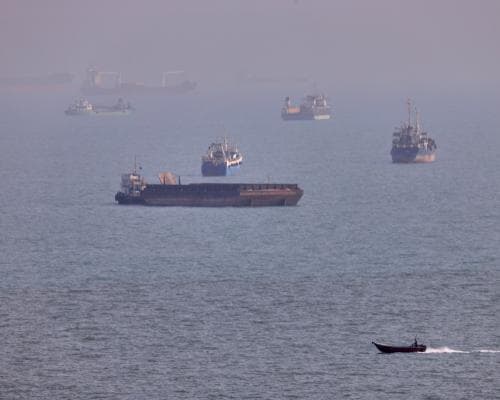
The recent military exchanges have already begun to affect global oil prices, which are on the rise due to fears of disrupted supply routes through the Strait of Hormuz. This strategic waterway is vital for oil exports, and Iran has threatened to block shipments if tensions escalate further. The economic ramifications of these military actions are significant, as they could lead to a broader economic standoff that impacts global markets.

Lead image — via The Guardian
The US has indicated that it may impose new sanctions in response to Iranian actions, further complicating the situation. The intertwining of military and economic strategies suggests that both nations may be pursuing hidden agendas that extend beyond immediate military objectives.
The Role of Political Rhetoric
Political leaders in both the US and Iran have engaged in aggressive rhetoric, with US President Donald Trump warning of severe consequences should Iran retaliate. Such statements not only escalate tensions but also serve to rally domestic support for military actions. Trump's history of threatening military action raises concerns about the potential for miscalculation and unintended consequences.
Iranian officials have also responded with strong language, vowing to retaliate against US strikes and asserting that they will not bow to external pressures. This cycle of threats and counter-threats creates an environment ripe for conflict, suggesting that both sides may be playing a dangerous game of brinkmanship.
Notable Quotes:
“If the enemy wants us not to export oil from the Persian Gulf, no one will be able to export oil.” – Mohammad Baqer Qalibaf, Iran’s parliament speaker.
Investigating Hidden Agendas
As the situation continues to unfold, conspiracy researchers should consider the possibility that these military actions are not merely reactions to provocations but part of a larger strategy involving regional power dynamics. The involvement of external actors, such as Russia and China, in the broader geopolitical landscape adds layers of complexity to the conflict.
The recent history of US-Iran relations, characterized by sanctions, proxy wars, and military posturing, suggests that both nations may have ulterior motives that go beyond immediate military objectives. Investigators should explore how these motivations could influence future actions and the potential for a wider conflict.
Conclusion: What Lies Ahead?
The escalating airstrikes between the US and Iran raise critical questions about the future of the region. As both nations prepare for potential further escalations, the implications for global stability and economic security are profound. What hidden agendas might be driving these military actions, and how could they reshape the geopolitical landscape in the coming months?
As we continue to monitor this situation, it is essential to remain vigilant and question the narratives presented by both sides. The answers may reveal deeper truths about the motivations behind this ongoing conflict.
For further reading on the implications of US-Iran relations, visit The Theorist.