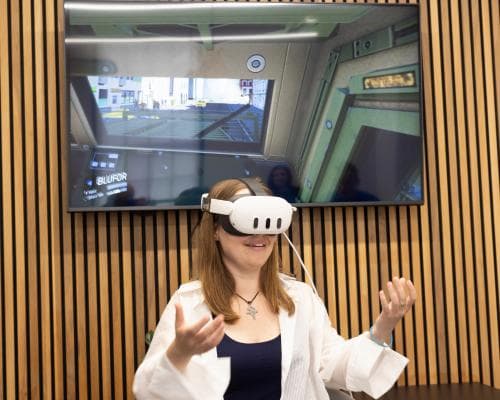
Virtual Gaming Worlds: The New Frontier in Military Training
In a groundbreaking shift, the British military is embracing advanced virtual environments for soldier training, likened to a more intense version of popular games like Fortnite. This transformation raises critical questions about the underlying motives and potential implications of such technology in military operations. As the UK Ministry of Defence invests £2 billion into these simulations, the need for transparency and understanding of their use becomes paramount for investigators and the public alike.
The Rise of Virtual Training Environments
On a seemingly ordinary day in Riga, Latvia, a NATO convoy navigates the bustling streets, only to be interrupted by a simulated explosion that engulfs a lead tank in flames. This scene, while fictional, is crafted with alarming realism by Skyral, a UK-based company that has secured a significant contract to develop immersive training simulations for British soldiers. The technology aims to replicate not just combat scenarios but the complex social dynamics and consequences of military actions in urban environments.
Historically, military training has utilized virtual environments, with the U.S. Army's America’s Army game being one of the earliest examples. However, Skyral's approach is markedly different. Instead of merely familiarizing soldiers with equipment, the focus is on understanding the broader implications of military decisions. For instance, a missile strike in a populated area could lead to varied civilian responses based on the context, such as the time of year or the state of local infrastructure.
The Concept of Digital Twins
Skyral's technology is described as creating a