TL;DR
- AI companies are purchasing large volumes of used books to train their models.
- The practice involves destroying books to scan them, raising ethical concerns.
- The focus is on books published before 2022 to avoid AI-generated text.
- The debate centers on the destruction of potentially rare books.
- The phenomenon highlights broader issues of data sourcing and ethics in AI.
The acquisition of used books by AI companies has become a significant point of contention in recent months. These companies are buying books in bulk, primarily to use them as training data for their AI models. This practice has sparked a heated debate, particularly due to the destruction of physical books, including potentially rare and out-of-print titles, to facilitate scanning. The ethical implications of this practice, especially concerning the preservation of cultural heritage, have become a focal point of the discussion.
The Surge in Used Book Purchases
In recent months, a mysterious trend has emerged in the global book market: a surge in the purchase of used books. This phenomenon has been linked to AI companies, which are reportedly buying these books in bulk to use as training data for their models. The practice has sparked significant debate, particularly concerning the destruction of physical books, including potentially rare and out-of-print titles, to facilitate scanning The Atlantic.
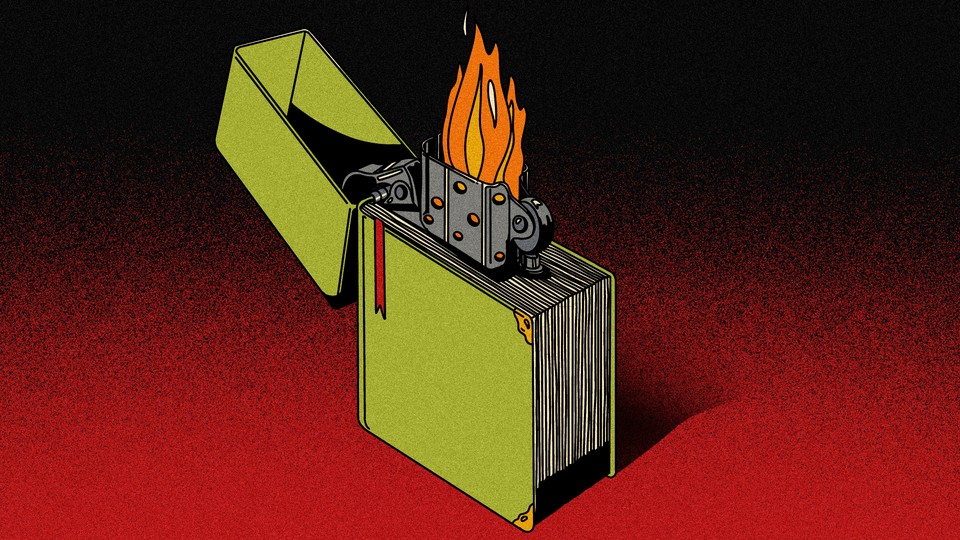
Illustration by Alisa Gao / The Atlantic — via Someone Is Mysteriously Snapping Up Used Books Around the World
The Mechanics of Book Scanning
The process of using books as training data involves a method known as "destructive scanning." This technique requires the physical destruction of books, typically by removing their spines, to efficiently scan the pages. Once scanned, the physical copies are often discarded. This method is favored for its efficiency but has drawn criticism for its irreversible impact on the physical book market The Guardian.
The mechanics of destructive scanning are straightforward yet controversial. The process begins with the acquisition of books, often in bulk, from various sources including libraries, second-hand bookstores, and online marketplaces. Once acquired, the books are prepared for scanning by removing their spines, which allows for faster and more efficient scanning of the pages. This method, while effective, results in the destruction of the physical book, which cannot be reassembled or reused. The scanned pages are then digitized and used as training data for AI models.
Why Books? The Quest for Quality Data
AI companies are particularly interested in books published before 2022. These texts are considered free from AI-generated content, which can degrade model performance if used as training data. This phenomenon, known as "model collapse," occurs when AI models are trained on data that includes their own outputs, leading to a decline in quality and accuracy. Books, therefore, provide a rich source of high-quality, human-generated text that is invaluable for training sophisticated AI models.
The quest for quality data is a driving force behind the acquisition of used books by AI companies. Books offer a unique and valuable source of human-generated text that is free from the biases and inaccuracies that can be introduced by AI-generated content. This makes them an ideal resource for training AI models, which rely on high-quality data to function effectively. By using books as training data, AI companies can ensure that their models are trained on accurate and reliable information, which is essential for their performance and reliability.
The Ethical Dilemma: Rare Books at Risk
The ethical implications of this practice have become a focal point of the debate. Critics argue that the destruction of books, especially those that are rare or out-of-print, is an unacceptable loss of cultural heritage. While many of the books being purchased are not rare in the traditional sense, they are often scarce and may hold historical or informational value that is not immediately apparent The Atlantic.
Cultural Heritage and Preservation
The destruction of books, particularly those that are rare or out-of-print, raises significant ethical concerns. Books are not just objects; they are vessels of knowledge, culture, and history. The loss of any book, especially those that are rare or hold historical significance, represents a loss of cultural heritage that cannot be replaced. This has led to calls for greater transparency and accountability from AI companies, as well as the development of ethical guidelines to govern the acquisition and use of books as training data.
The Role of ISBNdb and Other Buyers
ISBNdb, a book-database company, has been named as a potential buyer in this wave of book purchases. However, direct evidence linking ISBNdb to these transactions remains elusive. The lack of transparency from AI companies and other potential buyers has only fueled speculation and concern among booksellers and the public alike.
The involvement of ISBNdb and other potential buyers in the acquisition of used books for AI training has raised questions about the transparency and accountability of these transactions. While ISBNdb has been named as a potential buyer, there is little direct evidence to support these claims. This lack of transparency has fueled speculation and concern among booksellers and the public, who are calling for greater accountability and oversight of these transactions.
Implications for the Future of AI Training
The use of books as training data raises broader questions about the ethics and sustainability of data sourcing in AI development. As AI models become increasingly sophisticated, the demand for high-quality training data will continue to grow. This trend underscores the need for ethical guidelines and sustainable practices in data acquisition to ensure that cultural and informational resources are preserved for future generations.

A lighter-shaped book on fire — via Someone Is Mysteriously Snapping Up Used Books Around the World
Alternatives to Destructive Scanning
There are potential alternatives to the current practice of destructive scanning. Digital libraries and archives could serve as valuable resources for AI training data, offering access to a vast array of texts without the need for physical destruction. Collaborations between AI companies and libraries could facilitate the digitization of books in a way that preserves their physical integrity while still providing the necessary data for AI development.
Digital libraries and archives offer a promising alternative to the destructive scanning of books for AI training. By collaborating with libraries and archives, AI companies can access a vast array of texts without the need for physical destruction. This approach not only preserves the physical integrity of books but also ensures that cultural and informational resources are preserved for future generations. Additionally, the digitization of books can provide a more sustainable and ethical approach to data acquisition, which is essential for the future of AI development.
What to Watch Next
As the debate over the use of books in AI training continues, several key developments are worth monitoring. The response of the publishing industry and regulatory bodies to these practices will be crucial in shaping the future of data sourcing in AI. Additionally, advancements in AI technology may lead to new methods of data acquisition that are less reliant on physical resources.
Industry and Regulatory Responses
The response of the publishing industry and regulatory bodies to the use of books in AI training will be crucial in shaping the future of data sourcing in AI. As the demand for high-quality training data continues to grow, it is essential that ethical guidelines and sustainable practices are developed to govern the acquisition and use of books as training data. This will require collaboration between AI companies, publishers, and regulatory bodies to ensure that cultural and informational resources are preserved for future generations.
Technological Advancements
Advancements in AI technology may lead to new methods of data acquisition that are less reliant on physical resources. As AI models become increasingly sophisticated, the need for high-quality training data will continue to grow. This may lead to the development of new technologies and methods for data acquisition that are more sustainable and ethical, reducing the reliance on physical books as training data.
FAQ
Why are AI companies buying used books?
AI companies are purchasing used books to use as training data for their models. Books provide high-quality, human-generated text that is free from AI-generated content, which can degrade model performance.
What is destructive scanning?
Destructive scanning is a method used to efficiently scan books by removing their spines. This process allows for faster scanning but results in the destruction of the physical book.
Are rare books being destroyed?
While some books being purchased may be rare or out-of-print, the majority are not considered rare in the traditional sense. However, the destruction of any potentially rare books has raised ethical concerns.
What are the alternatives to using physical books for AI training?
Alternatives include using digital libraries and archives, which can provide access to a wide range of texts without the need for physical destruction. Collaborations between AI companies and libraries could facilitate the digitization of books in a sustainable manner.
Related investigations
- Unveiling the All-domain Anomaly Resolution Office (AARO) — All-domain Anomaly Resolution Office
- BHP's Scrapped Pilbara Plant: A Conspiracy Against Climate Progress? — BHP Pilbara plant conspiracy
- Airline Emissions: The Hidden Truth Behind Europe's Carbon Surge — airline emissions Europe